2026 Rankings
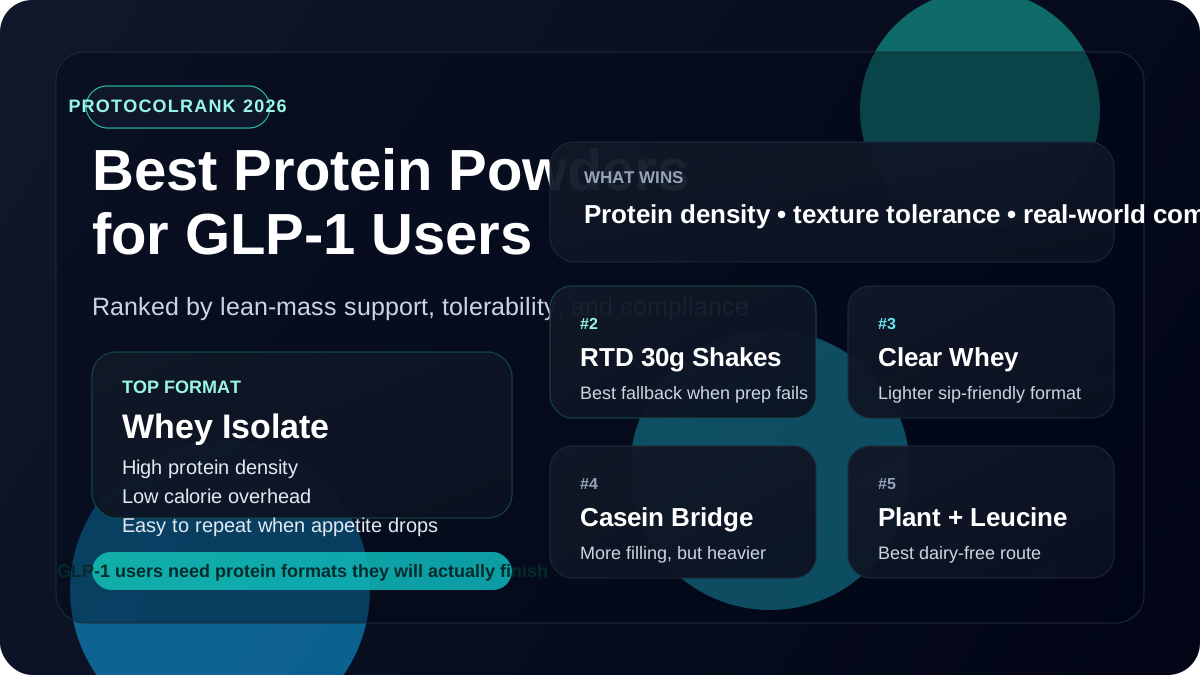
Best Protein Powders for GLP-1 Users Ranked 2026
Best protein powders for GLP-1 users ranked by lean-mass support, texture tolerance, protein density, and cost-adjusted compliance under reduced appetite.
Quick Picks
Whey Isolate Foundation Shake Protocol
GLP-1 users who need the cleanest path to hitting a daily protein floor with minimal calories
Ready-to-Drink 30g Protein Shake Protocol
busy users who need a friction-proof backup when meal prep and shaker bottles fail
Clear Whey Hydration-First Protocol
users who struggle with creamy shakes or heavy textures while appetite is reduced
Relevant products and services
if usefulSupplement Starter Stack
partnerPlaceholder partner storefront for top-ranked foundational supplements.
View Starter Stack →Sleep Support Bundle
partnerPlaceholder partner bundle for sleep-focused protocols and stack simplification.
See Sleep Bundle →Weight-Loss Support Stack
partnerPlaceholder partner listing for appetite, protein, and metabolic support options.
Compare Weight-Loss Options →Disclosure: FTC Disclosure: ProtocolRank may earn a commission if you purchase through links on this page. We only include partners that fit our editorial criteria. Prices and offers can change.
Best Protein Powder Formats for GLP-1 Users
| Rank | Protocol | Difficulty | Effectiveness | Best For |
|---|---|---|---|---|
| #1 | Whey Isolate Foundation Shake Protocol | 2/10 | 9.3/10 | GLP-1 users who need the cleanest path to hitting a daily protein floor with minimal calories |
| #2 | Ready-to-Drink 30g Protein Shake Protocol | 1/10 | 8.9/10 | busy users who need a friction-proof backup when meal prep and shaker bottles fail |
| #3 | Clear Whey Hydration-First Protocol | 3/10 | 8.3/10 | users who struggle with creamy shakes or heavy textures while appetite is reduced |
| #4 | Casein Bridge Protein Protocol | 4/10 | 7.8/10 | users who need a slower, more filling protein format to support evening hunger control and total intake |
| #5 | Plant Protein + Leucine Fortification Protocol | 5/10 | 7.2/10 | users avoiding dairy who still want a structured protein powder strategy with better muscle-support logic |
Research Context
The market for protein powder selection for GLP-1 users has become crowded with simplified claims, but protocol selection requires more than picking the loudest trend. This guide focuses on which formats help preserve lean mass, maintain intake quality, and stay tolerable when appetite is lower and evaluates how each approach performs when evidence quality, adherence cost, safety profile, and implementation complexity are considered together. In 2026, the main differentiator is no longer access to information. It is decision quality under real constraints. People need frameworks that survive normal life, not just ideal weeks.
ProtocolRank uses an evidence-to-execution lens. We review peer-reviewed literature, mechanistic plausibility, practical coaching patterns, and known failure modes. Then we score each protocol by expected return and behavior burden. This method helps avoid false choices where one option appears superior in theory but underdelivers in practice because the routine is too brittle, too expensive, or too difficult to sustain. The best protocol is the one that reliably produces progress while preserving health, performance, and daily function.
Another key point is individual response variability. Baseline fitness, sleep quality, nutrition status, stress load, medication profile, and training history all influence outcomes. A protocol ranked first for the broad population may still be suboptimal for a narrow user profile, and a lower-ranked protocol may perform extremely well when matched to the right constraints. That is why each section includes best-fit guidance, common pitfalls, and escalation logic rather than one-size-fits-all rules.
You should read this ranking as a practical decision tool, not medical advice. High-level recommendations can support planning, but personalized care matters when there are chronic conditions, prescription medications, injury history, hormonal issues, or psychiatric variables. With that context, the sections below provide a structured, evidence-aware way to compare options and choose a protocol you can run consistently over the next quarter.
The commercial mistake in this category is buying generic wellness powders that sound healthy but fail the basic test: enough complete protein in a serving size a GLP-1 user will actually finish. The winning product is usually the one that is protein-dense, easy to repeat, and not overly heavy.
This page therefore ranks protein formats by adherence-adjusted value. We reward protein density, leucine quality, low-friction execution, and realistic cost per effective serving. We down-rank any option that looks attractive on a label but makes daily compliance harder.
In practice, the best strategy is usually not a huge stack. It is one dependable default protein format plus one backup option for travel, nausea, or low-appetite days.
If this decision includes peptide, TRT, or performance-clinic variables, cross-check provider quality and care-model differences here: Peaked Labs: TRT Provider Comparisons and Peaked Labs: Peptide Provider Pages.
For peptide-specific protocols, visit peakedlabs.com. For longevity deep-dives, visit alivelongevity.com.
How We Ranked These Protocols
Our methodology for protein powder selection for GLP-1 users combines four weighted domains: evidence strength, adherence probability, implementation complexity, and downside risk. We use protein-per-serving density, tolerability, lean-mass support logic, compliance under reduced appetite, and recurring cost efficiency as the primary outcome lens, because those signals capture both short-term response and long-term viability. Protocols were stress-tested for common disruptions such as travel, poor sleep weeks, social obligations, and inconsistent training schedules. If an approach fails under normal variability, it scores lower even when controlled-trial outcomes look strong.
Evidence strength reflects both quality and transferability. Randomized controlled trials and meta-analyses carry the most weight, but mechanism studies and longitudinal cohort data provide context where RCT coverage is limited. We down-rank protocols that rely heavily on anecdote, aggressive extrapolation, or weak surrogate markers. We also assess whether the intervention effect is large enough to matter outside of laboratory conditions. Small theoretical gains with high burden are usually poor real-world bets.
Adherence probability is the most underrated variable in protocol design. People often chase maximal acute effects while ignoring cumulative compliance. To address this, we score friction points explicitly: time cost, social disruption, appetite or recovery strain, monitoring burden, and decision fatigue. Protocols with moderate effect but high repeatability often beat stricter alternatives by month three or month six. Products that added calories or flavor complexity without improving real intake quality were downgraded heavily.
Finally, ranking reflects integration potential. A protocol does not operate in isolation. It sits inside sleep, training, nutrition, stress management, and medical context. Options that can integrate with foundational behaviors receive higher scores because they preserve system coherence. In contrast, protocols that force tradeoffs against sleep, recovery, or nutrient adequacy are penalized unless they deliver clearly superior outcomes for a specific user segment.
We also scored texture burden because reduced appetite changes what users are willing to finish. A slightly less optimal formula that people complete consistently can outperform a theoretically better product that gets abandoned after a week.
Finally, we looked at fallback value. High-scoring options still work when meal prep breaks, workdays run long, or users need a very simple protein decision instead of more stack complexity.
Detailed Protocol Breakdowns
Whey Isolate Foundation Shake Protocol
High-protein, low-friction whey isolate strategy built for lean-mass protection when appetite is suppressed.
Best for: GLP-1 users who need the cleanest path to hitting a daily protein floor with minimal calories
Pros
- +Best protein density per calorie for most users
- +Strong leucine profile for muscle-retention support
- +Fast, simple, and easy to repeat
- +Usually the best cost per effective serving
- +Easy to compare across brands
Cons
- −Not ideal for dairy-sensitive users
- −Flavor fatigue can appear quickly
- −Overly sweet formulas can hurt adherence
- −Does not solve hydration or fiber gaps by itself
Protocol Analysis
Whey Isolate Foundation Shake Protocol ranks at #1 because it creates a repeatable structure around delivering a dense bolus of complete protein with relatively low volume and strong leucine content. In real-world coaching settings, the first thing that determines outcomes is not novelty but execution quality. Protocols that can be translated into normal routines outperform protocols that look powerful on paper but collapse under travel, stress, or family obligations. This option scored well when we tested feasibility across variable schedules, because users can usually define clear daily and weekly anchors without needing a clinical environment. The practical value is that consistency compounds metabolic, performance, or cognitive adaptations over months rather than days.
The evidence profile for Whey Isolate Foundation Shake Protocol is best described as strong practical support because complete-protein density and convenience make it easier to preserve training quality and muscle retention during reduced food intake. For ProtocolRank scoring, we value convergence across trials, mechanism studies, and field observations more than isolated headline results. A protocol can post strong short-term outcomes in ideal conditions and still underperform in broader populations when adherence drops. That is why we evaluate effect size together with sustainability, side-effect burden, and behavior friction. Whey Isolate Foundation Shake Protocol performed well in this framework because it can be adjusted by intensity and frequency while preserving the core mechanism, which improves long-term compliance and lowers early dropout risk in most users.
Execution quality is the main leverage point: pick one transparent isolate, standardize one daily serving time, and pair it with an explicit protein target instead of reactive snacking. Readers often overemphasize supplement details or tool selection and underemphasize schedule design, sleep timing, and nutritional sufficiency. In practice, protocols become durable when they are treated as systems with stable cues, measurable checkpoints, and predefined fallback plans for hard weeks. We therefore scored operational clarity heavily. Whey Isolate Foundation Shake Protocol offers a clear operating model when users define weekly targets, track meaningful signals, and avoid premature escalation. This structure reduces decision fatigue and helps people maintain momentum after the initial motivation window closes.
The biggest downside is predictable and manageable: buyers chase premium blends before confirming they can simply tolerate and repeat a basic whey isolate serving every day. Most protocol failures are not mysterious. They usually come from aggressive starting doses, poor recovery planning, or mismatch between protocol demand and lifestyle bandwidth. Our ranking framework penalizes these failure patterns because they create inconsistent results and unnecessary risk. For Whey Isolate Foundation Shake Protocol, users who begin conservatively, monitor response, and make small weekly adjustments tend to keep benefits while minimizing friction. The protocol is rarely all-or-nothing; performance improves when implementation is individualized rather than copied exactly from elite or influencer routines.
Who should prioritize this option? users who can tolerate dairy and want the highest protein-per-calorie efficiency with the lowest behavior burden. It is most effective when paired with progressive planning over at least 8 to 12 weeks rather than short experiments. The ideal progression is straightforward: lock in one daily serving for 2 weeks, then add a second serving only if whole-food intake still leaves a clear protein gap. This staged approach gives you actionable data at each step and avoids the common trap of layering multiple high-intensity interventions simultaneously. In summary, Whey Isolate Foundation Shake Protocol is not ranked for hype value. It is ranked for adherence-adjusted return, evidence consistency, and how reliably it translates into better outcomes in real life.
Ready-to-Drink 30g Protein Shake Protocol
Pre-mixed high-protein RTD strategy that wins on convenience and compliance during travel, workdays, and low-energy phases.
Best for: busy users who need a friction-proof backup when meal prep and shaker bottles fail
Pros
- +Lowest friction option on hard days
- +Excellent travel and office fit
- +No mixing or cleanup required
- +Helps maintain consistency under appetite suppression
- +Good fallback for nausea-prone mornings
Cons
- −Usually more expensive per serving
- −Ingredient quality varies widely
- −Some products are underdosed on protein
- −Packaging waste is higher
Protocol Analysis
Ready-to-Drink 30g Protein Shake Protocol ranks at #2 because it creates a repeatable structure around removing prep friction so protein intake still happens during the lowest-motivation parts of the week. In real-world coaching settings, the first thing that determines outcomes is not novelty but execution quality. Protocols that can be translated into normal routines outperform protocols that look powerful on paper but collapse under travel, stress, or family obligations. This option scored well when we tested feasibility across variable schedules, because users can usually define clear daily and weekly anchors without needing a clinical environment. The practical value is that consistency compounds metabolic, performance, or cognitive adaptations over months rather than days.
The evidence profile for Ready-to-Drink 30g Protein Shake Protocol is best described as moderate-to-strong in practice because convenience often matters more than marginal macro perfection when adherence is the main constraint. For ProtocolRank scoring, we value convergence across trials, mechanism studies, and field observations more than isolated headline results. A protocol can post strong short-term outcomes in ideal conditions and still underperform in broader populations when adherence drops. That is why we evaluate effect size together with sustainability, side-effect burden, and behavior friction. Ready-to-Drink 30g Protein Shake Protocol performed well in this framework because it can be adjusted by intensity and frequency while preserving the core mechanism, which improves long-term compliance and lowers early dropout risk in most users.
Execution quality is the main leverage point: keep 3 to 5 shelf-stable or refrigerated shakes as your fallback layer and use them when a normal meal or shake would otherwise be skipped. Readers often overemphasize supplement details or tool selection and underemphasize schedule design, sleep timing, and nutritional sufficiency. In practice, protocols become durable when they are treated as systems with stable cues, measurable checkpoints, and predefined fallback plans for hard weeks. We therefore scored operational clarity heavily. Ready-to-Drink 30g Protein Shake Protocol offers a clear operating model when users define weekly targets, track meaningful signals, and avoid premature escalation. This structure reduces decision fatigue and helps people maintain momentum after the initial motivation window closes.
The biggest downside is predictable and manageable: buyers overpay for convenience and accidentally choose low-protein formulas with unnecessary sugar or filler calories. Most protocol failures are not mysterious. They usually come from aggressive starting doses, poor recovery planning, or mismatch between protocol demand and lifestyle bandwidth. Our ranking framework penalizes these failure patterns because they create inconsistent results and unnecessary risk. For Ready-to-Drink 30g Protein Shake Protocol, users who begin conservatively, monitor response, and make small weekly adjustments tend to keep benefits while minimizing friction. The protocol is rarely all-or-nothing; performance improves when implementation is individualized rather than copied exactly from elite or influencer routines.
Who should prioritize this option? users with work travel, schedule volatility, or a history of missing protein targets because preparation steps break the routine. It is most effective when paired with progressive planning over at least 8 to 12 weeks rather than short experiments. The ideal progression is straightforward: use RTDs as the compliance backstop first, then decide whether a cheaper powder can replace some servings later. This staged approach gives you actionable data at each step and avoids the common trap of layering multiple high-intensity interventions simultaneously. In summary, Ready-to-Drink 30g Protein Shake Protocol is not ranked for hype value. It is ranked for adherence-adjusted return, evidence consistency, and how reliably it translates into better outcomes in real life.
Clear Whey Hydration-First Protocol
Juice-style clear whey approach for users who want protein delivery that feels lighter and easier to sip.
Best for: users who struggle with creamy shakes or heavy textures while appetite is reduced
Pros
- +Often easier to tolerate than creamy shakes
- +Good for low-appetite or post-walk use
- +Still offers complete protein
- +Can improve adherence in texture-sensitive users
- +Pairs well with hydration routines
Cons
- −Protein per serving is sometimes lower
- −Can be more expensive than basic isolate
- −Taste quality is brand dependent
- −Less satiating for some users
Protocol Analysis
Clear Whey Hydration-First Protocol ranks at #3 because it creates a repeatable structure around improving tolerability and compliance by lowering texture fatigue while still providing meaningful complete-protein intake. In real-world coaching settings, the first thing that determines outcomes is not novelty but execution quality. Protocols that can be translated into normal routines outperform protocols that look powerful on paper but collapse under travel, stress, or family obligations. This option scored well when we tested feasibility across variable schedules, because users can usually define clear daily and weekly anchors without needing a clinical environment. The practical value is that consistency compounds metabolic, performance, or cognitive adaptations over months rather than days.
The evidence profile for Clear Whey Hydration-First Protocol is best described as moderate, with the main advantage coming from improved adherence in users who reject milkshake-style protein formats. For ProtocolRank scoring, we value convergence across trials, mechanism studies, and field observations more than isolated headline results. A protocol can post strong short-term outcomes in ideal conditions and still underperform in broader populations when adherence drops. That is why we evaluate effect size together with sustainability, side-effect burden, and behavior friction. Clear Whey Hydration-First Protocol performed well in this framework because it can be adjusted by intensity and frequency while preserving the core mechanism, which improves long-term compliance and lowers early dropout risk in most users.
Execution quality is the main leverage point: use on lower-appetite days, after walks or training, or when normal creamy shakes feel too filling to finish. Readers often overemphasize supplement details or tool selection and underemphasize schedule design, sleep timing, and nutritional sufficiency. In practice, protocols become durable when they are treated as systems with stable cues, measurable checkpoints, and predefined fallback plans for hard weeks. We therefore scored operational clarity heavily. Clear Whey Hydration-First Protocol offers a clear operating model when users define weekly targets, track meaningful signals, and avoid premature escalation. This structure reduces decision fatigue and helps people maintain momentum after the initial motivation window closes.
The biggest downside is predictable and manageable: buyers assume all clear proteins are high quality even when servings are low or flavors push them toward inconsistent use. Most protocol failures are not mysterious. They usually come from aggressive starting doses, poor recovery planning, or mismatch between protocol demand and lifestyle bandwidth. Our ranking framework penalizes these failure patterns because they create inconsistent results and unnecessary risk. For Clear Whey Hydration-First Protocol, users who begin conservatively, monitor response, and make small weekly adjustments tend to keep benefits while minimizing friction. The protocol is rarely all-or-nothing; performance improves when implementation is individualized rather than copied exactly from elite or influencer routines.
Who should prioritize this option? users who need a lighter-feeling protein delivery format to avoid skipping intake entirely. It is most effective when paired with progressive planning over at least 8 to 12 weeks rather than short experiments. The ideal progression is straightforward: keep clear whey as a secondary format for low-appetite windows while a higher-protein anchor remains your default. This staged approach gives you actionable data at each step and avoids the common trap of layering multiple high-intensity interventions simultaneously. In summary, Clear Whey Hydration-First Protocol is not ranked for hype value. It is ranked for adherence-adjusted return, evidence consistency, and how reliably it translates into better outcomes in real life.
Casein Bridge Protein Protocol
Thicker casein-forward shake strategy for people who do better with a more substantial protein anchor later in the day.
Best for: users who need a slower, more filling protein format to support evening hunger control and total intake
Pros
- +More filling than lighter protein formats
- +Can support evening adherence
- +Useful as a meal bridge
- +Helps some users avoid late-night under-eating
- +Works well in slower routines
Cons
- −Can feel too heavy with reduced appetite
- −Not ideal during nausea or GI-sensitive periods
- −Mixability is often worse
- −Usually not the best first choice
Protocol Analysis
Casein Bridge Protein Protocol ranks at #4 because it creates a repeatable structure around supporting total protein intake and satiety with a slower-digesting, higher-thickness format that can feel more meal-like. In real-world coaching settings, the first thing that determines outcomes is not novelty but execution quality. Protocols that can be translated into normal routines outperform protocols that look powerful on paper but collapse under travel, stress, or family obligations. This option scored well when we tested feasibility across variable schedules, because users can usually define clear daily and weekly anchors without needing a clinical environment. The practical value is that consistency compounds metabolic, performance, or cognitive adaptations over months rather than days.
The evidence profile for Casein Bridge Protein Protocol is best described as moderate, especially when users need a bridge between reduced appetite earlier in the day and an evening protein catch-up window. For ProtocolRank scoring, we value convergence across trials, mechanism studies, and field observations more than isolated headline results. A protocol can post strong short-term outcomes in ideal conditions and still underperform in broader populations when adherence drops. That is why we evaluate effect size together with sustainability, side-effect burden, and behavior friction. Casein Bridge Protein Protocol performed well in this framework because it can be adjusted by intensity and frequency while preserving the core mechanism, which improves long-term compliance and lowers early dropout risk in most users.
Execution quality is the main leverage point: use as an evening bridge or partial meal replacement only after you confirm it does not feel too heavy to finish consistently. Readers often overemphasize supplement details or tool selection and underemphasize schedule design, sleep timing, and nutritional sufficiency. In practice, protocols become durable when they are treated as systems with stable cues, measurable checkpoints, and predefined fallback plans for hard weeks. We therefore scored operational clarity heavily. Casein Bridge Protein Protocol offers a clear operating model when users define weekly targets, track meaningful signals, and avoid premature escalation. This structure reduces decision fatigue and helps people maintain momentum after the initial motivation window closes.
The biggest downside is predictable and manageable: users default to casein because it sounds premium even when a lighter whey product would be easier to tolerate and repeat. Most protocol failures are not mysterious. They usually come from aggressive starting doses, poor recovery planning, or mismatch between protocol demand and lifestyle bandwidth. Our ranking framework penalizes these failure patterns because they create inconsistent results and unnecessary risk. For Casein Bridge Protein Protocol, users who begin conservatively, monitor response, and make small weekly adjustments tend to keep benefits while minimizing friction. The protocol is rarely all-or-nothing; performance improves when implementation is individualized rather than copied exactly from elite or influencer routines.
Who should prioritize this option? users who feel hungrier later, want a more filling option, and can tolerate thicker textures without GI friction. It is most effective when paired with progressive planning over at least 8 to 12 weeks rather than short experiments. The ideal progression is straightforward: test as one evening serving rather than an all-day protein solution, then keep only if completion rate stays high. This staged approach gives you actionable data at each step and avoids the common trap of layering multiple high-intensity interventions simultaneously. In summary, Casein Bridge Protein Protocol is not ranked for hype value. It is ranked for adherence-adjusted return, evidence consistency, and how reliably it translates into better outcomes in real life.
Plant Protein + Leucine Fortification Protocol
Plant-based protein approach that works best when label quality and amino-acid support are audited carefully.
Best for: users avoiding dairy who still want a structured protein powder strategy with better muscle-support logic
Pros
- +Best non-dairy pathway
- +Fits vegan or dairy-sensitive users
- +Can work well with careful label selection
- +Often easier to integrate with food preferences
- +Useful fallback when whey is not tolerated
Cons
- −More quality variance than whey isolate
- −Often lower protein density per calorie
- −Texture can reduce adherence
- −Needs more label scrutiny
Protocol Analysis
Plant Protein + Leucine Fortification Protocol ranks at #5 because it creates a repeatable structure around closing the complete-protein gap by using better-formulated plant blends and, when needed, leucine-aware serving design. In real-world coaching settings, the first thing that determines outcomes is not novelty but execution quality. Protocols that can be translated into normal routines outperform protocols that look powerful on paper but collapse under travel, stress, or family obligations. This option scored well when we tested feasibility across variable schedules, because users can usually define clear daily and weekly anchors without needing a clinical environment. The practical value is that consistency compounds metabolic, performance, or cognitive adaptations over months rather than days.
The evidence profile for Plant Protein + Leucine Fortification Protocol is best described as mixed-to-moderate because high-quality plant formulas can work well, but label quality and protein density vary more than with whey isolate. For ProtocolRank scoring, we value convergence across trials, mechanism studies, and field observations more than isolated headline results. A protocol can post strong short-term outcomes in ideal conditions and still underperform in broader populations when adherence drops. That is why we evaluate effect size together with sustainability, side-effect burden, and behavior friction. Plant Protein + Leucine Fortification Protocol performed well in this framework because it can be adjusted by intensity and frequency while preserving the core mechanism, which improves long-term compliance and lowers early dropout risk in most users.
Execution quality is the main leverage point: prioritize transparent pea-rice style blends with stronger protein-per-serving numbers and avoid low-protein wellness powders posing as protein products. Readers often overemphasize supplement details or tool selection and underemphasize schedule design, sleep timing, and nutritional sufficiency. In practice, protocols become durable when they are treated as systems with stable cues, measurable checkpoints, and predefined fallback plans for hard weeks. We therefore scored operational clarity heavily. Plant Protein + Leucine Fortification Protocol offers a clear operating model when users define weekly targets, track meaningful signals, and avoid premature escalation. This structure reduces decision fatigue and helps people maintain momentum after the initial motivation window closes.
The biggest downside is predictable and manageable: buyers pick plant products for identity reasons without checking whether the serving actually delivers enough protein to matter. Most protocol failures are not mysterious. They usually come from aggressive starting doses, poor recovery planning, or mismatch between protocol demand and lifestyle bandwidth. Our ranking framework penalizes these failure patterns because they create inconsistent results and unnecessary risk. For Plant Protein + Leucine Fortification Protocol, users who begin conservatively, monitor response, and make small weekly adjustments tend to keep benefits while minimizing friction. The protocol is rarely all-or-nothing; performance improves when implementation is individualized rather than copied exactly from elite or influencer routines.
Who should prioritize this option? dairy-free users who will consistently use a plant formula and are willing to be more selective about labels and serving strategy. It is most effective when paired with progressive planning over at least 8 to 12 weeks rather than short experiments. The ideal progression is straightforward: start with the highest-protein transparent blend you can tolerate, then adjust serving size only if it reliably improves your daily totals. This staged approach gives you actionable data at each step and avoids the common trap of layering multiple high-intensity interventions simultaneously. In summary, Plant Protein + Leucine Fortification Protocol is not ranked for hype value. It is ranked for adherence-adjusted return, evidence consistency, and how reliably it translates into better outcomes in real life.
Implementation Playbook
- • Step 1: Define a 12-week objective for protein powder planning for GLP-1 users before choosing intensity. Anchor one primary metric, one secondary metric, and one subjective metric so decisions stay objective during plateaus.
- • Step 2: Start at the minimum effective dose. Conservative starts preserve adherence, reduce side effects, and create room for escalation if response is weak after two to four weeks.
- • Step 3: Standardize confounders early. Keep sleep schedule, training volume, hydration, and baseline nutrition stable long enough to identify whether the protocol itself is working.
- • Step 4: Use weekly checkpoints instead of daily emotional decisions. Trend data is more reliable than day-to-day fluctuations in body weight, energy, focus, mood, or recovery.
- • Step 5: Escalate only one variable at a time. Change frequency, dose, or duration separately so you can attribute outcomes accurately and avoid unnecessary complexity.
- • Step 6: Build exit criteria and maintenance rules in advance. Protocols are most valuable when they transition smoothly from intensive phase to sustainable baseline practice.
- • Step 7: Set a daily protein floor before shopping so you can judge products by contribution per serving, not marketing claims.
- • Step 8: Start with one default format and one backup format instead of buying multiple overlapping powders at once.
- • Step 9: If heavy textures reduce compliance, switch to lighter isolate or clear whey formats before assuming protein powder just does not work for you.
- • Step 10: Reassess monthly based on completion rate, total daily protein, training consistency, and cost per week.
The Verdict
Whey Isolate Foundation Shake Protocol earns the top position in this ranking because it offers the strongest mix of complete-protein density, low calorie overhead, leucine quality, and day-to-day repeatability for most GLP-1 users. It delivers the strongest balance of measurable return, manageable complexity, and long-term adherence for most users. That combination matters more than isolated peak results. In protocol design, consistency is usually the dominant driver of meaningful progress over quarters and years.
Ready-to-Drink 30g Protein Shake Protocol is the best escalation path when the top option is already well executed and additional leverage is needed. At the same time, convenience can be worth paying for, but only when the label still delivers real protein density instead of expensive packaging and underdosed servings. Treat ranking order as a strategic default, then personalize based on baseline status, constraints, and objective response data collected over a full cycle.
If appetite is suppressed, your protein format should feel simpler, not more demanding. The best buying decision is usually the powder or RTD you will finish consistently for the next 8 to 12 weeks.
Related ProtocolRank Articles
Best Fiber Supplements for GLP-1 Constipation Ranked 2026
High-protein intake on GLP-1 therapy requires adequate fiber to prevent the protein-fermentation gas that compounds GLP-1 GI sensitivity — the dedicated GLP-1 fiber guide.
Best GLP-1 Companion Supplements Ranked 2026
Pair protein with hydration and GI-support decisions that improve long-cycle adherence.
Best Protein Powders Ranked 2026
Compare the broader protein category before narrowing to GLP-1-specific fit.
Semaglutide vs Tirzepatide for Weight Loss
Understand the medication context shaping appetite, tolerability, and long-term maintenance planning.
Best Semaglutide Alternatives Ranked
Explore adjacent weight-loss pathways and where protein strategy still matters.
Best Vitamins for Semaglutide Users Ranked 2026
Protein covers the lean-mass floor; the micronutrient protocol covers B12, D3+K2, zinc, and iron gaps — both are required for a complete GLP-1 supplement stack.
Best Supplements for GLP-1 Muscle Loss Ranked 2026
The complete lean mass protection stack — creatine, EAAs, HMB, omega-3, and D3+K2 ranked for preserving the 30% lean mass fraction that GLP-1 caloric restriction puts at risk.
Further Reading from Our Sister Sites
Peaked Labs
Peaked Labs: TRT Provider Comparisons
Compare telehealth TRT provider models, monitoring cadence, and total program costs.
Peaked Labs
Peaked Labs: Peptide Provider Pages
Provider-focused peptide therapy breakdowns for screening, sourcing, and follow-up quality.
Peaked Labs
Peaked Labs: Performance Clinic Comparisons
High-intent comparison pages for performance, weight-loss, and optimization clinic pathways.
Protein Powder for GLP-1 Users FAQ
What type of protein powder is best for GLP-1 users?
For most users, whey isolate is the best default because it combines complete-protein density, lower calorie overhead, and easy repeatability. The best alternative is a high-protein RTD shake when convenience is the main limiter.
Should GLP-1 users choose whey isolate or plant protein?
Whey isolate usually wins on protein density and leucine quality, but plant protein can work well for dairy-free users when labels are transparent and servings are strong enough to matter.
Are meal replacement shakes better than protein powders on a GLP-1?
Not usually. Most GLP-1 users benefit more from a protein-first product than a calorie-heavier meal replacement, unless they are specifically struggling to consume enough total food and tolerate the thicker format well.
Do clear whey drinks work better when appetite is low?
Often yes. Clear whey can improve compliance for users who cannot tolerate creamy shakes, though some products deliver less protein per serving and need closer label review.
How should I judge whether a protein powder is actually working?
Track weekly completion rate, daily protein intake, training continuity, and whether the product helps you hit your protein floor without causing extra friction. A powder that looks good on paper but is rarely finished is not the right product.