Supplement Comparison
Andrew Huberman vs Peter Attia: Supplement Stack Comparison 2026
Two of the most-followed figures in longevity and performance science take fundamentally different approaches to supplementation. This comparison maps their core stack philosophies, evidence standards, cost structures, and who each model actually fits — so you can extract the highest-return elements from each.
TL;DR — Quick Verdict
- Huberman: Modular, behavior-first, outcome-domain testing. Best for accessible, low-friction supplementation experiments.
- Attia: Lab-driven, risk-calibrated, longitudinal protocol. Best for long-horizon health architecture with biomarker feedback.
- Both agree: Sleep, exercise, and protein quality outperform any supplement stack in expected value.
- Best hybrid: Huberman's modular structure + Attia's evidence discipline = the highest-return personal protocol for most people.
Further Reading from Our Sister Sites
Alive Longevity
Alive Longevity: Longevity Supplement Guides
Research-backed supplement explainers and buyer guides for stacking decisions.
Alive Longevity
Alive Longevity: Ingredient Deep Dives
Deep dives on high-interest ingredients like omega-3s, collagen, and magnesium forms.
Alive Longevity
Alive Longevity: NAD+ and Mitochondria Articles
Topic-focused reading for NAD boosters, mitochondrial support, and healthy-aging strategy.
Visual Summary: Modular Performance vs Clinical Precision
Huberman's model is domain-first and self-directed. Attia's model is biomarker-first and physician-supported. Two different entry points to long-term optimization.
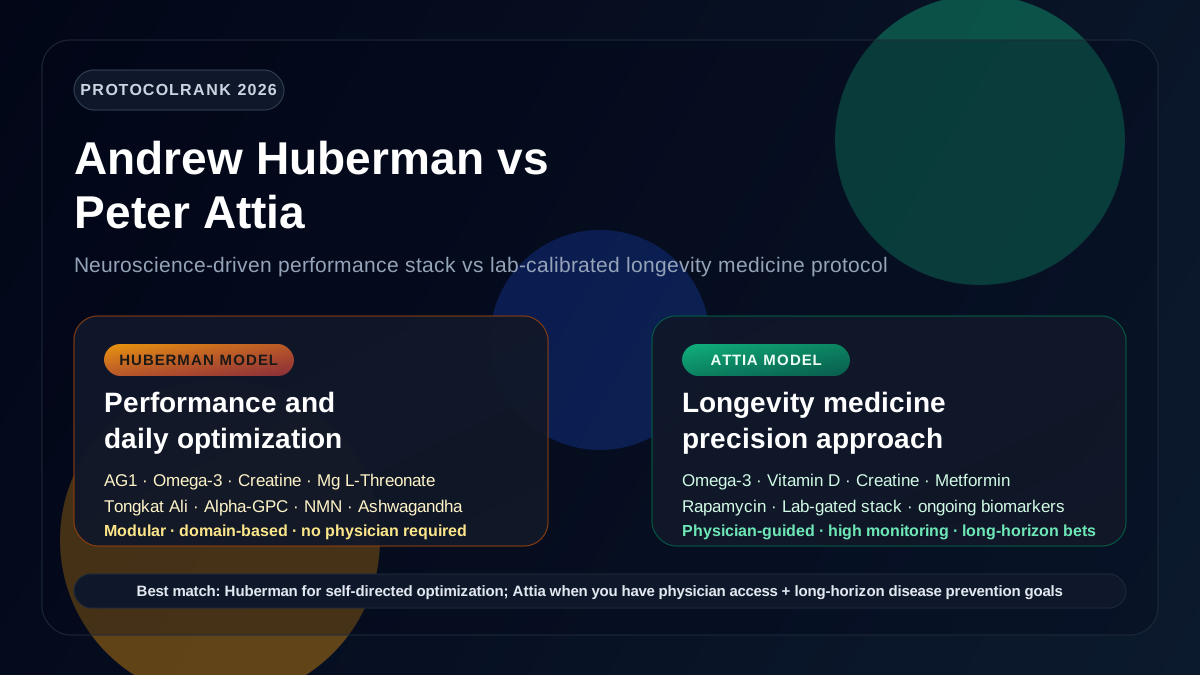
Side-by-Side Comparison
| Category | Andrew Huberman Approach | Peter Attia Approach |
|---|---|---|
| Primary Focus | Performance, cognition, sleep, and stress resilience via behavior-first supplementation. | Longevity medicine: delaying chronic disease, optimizing metabolic health, and maintaining function into later decades. |
| Core Philosophy | Behavior optimization first; supplements as optional, modular performance tools layered on top. | Lab-driven personalization; supplements chosen in response to objective data and individual risk profiles. |
| Stack Style | Outcome-domain modules (sleep stack, focus stack, training stack) that can be run independently. | Longitudinal protocol updated by biomarker tracking; foundational plus targeted compounds. |
| Complexity | Moderate when selective; high if multiple modules are combined without discipline. | High due to continuous lab monitoring, dose calibration, and physician oversight requirements. |
| Estimated Monthly Cost | Low to moderate for selective module use; can rise sharply with multi-module stacking. | Moderate to very high when lab testing, physician consults, and prescription compounds are included. |
| Monitoring Requirement | Minimal for most over-the-counter compounds; lab testing optional but encouraged over time. | Extensive — regular bloodwork, biomarker trending, and often clinical oversight are core to the model. |
| Evidence Threshold | Mechanistic plausibility plus practical observational data; higher threshold for widely discussed compounds. | Prefers controlled trial evidence for prescription tools; accepts strong epidemiology for foundational supplements. |
| Best Fit | Users who want structured, low-friction experiments around specific outcomes like sleep or focus. | Users committed to a long-term health architecture with budget and tolerance for ongoing data collection. |
Overview: Why the Comparison Matters
The comparison between Andrew Huberman and Peter Attia is one of the most common questions in the longevity and biohacking space — not because both figures are equally popular, but because they represent genuinely different philosophies about how supplementation should work. Huberman's approach is shaped by neuroscience, behavior design, and accessible experimentation. Attia's approach is shaped by clinical medicine, risk-adjusted thinking, and longitudinal data collection. Understanding that distinction matters far more than comparing individual compounds.
Huberman-style supplementation is typically introduced as optional tooling on top of a behavior foundation. Sleep timing, morning light, consistent exercise, and nutrition quality are framed as the primary drivers. Supplements enter the protocol when the behavioral foundation is established and when a specific outcome domain — sleep quality, cognitive edge, training recovery, stress regulation — shows a potential gap. This structure makes the approach accessible: users can adopt a single module without overhauling their entire day.
Attia's supplement model operates differently. It is grounded in clinical reasoning, shaped by each individual's biomarker picture, and designed with decade-length horizons in mind. Compounds like low-dose rapamycin or metformin (since reconsidered) entered Attia's protocol because his lab data and risk model supported a defensible rationale, not because they were trendy. This means the Attia-style approach is less a product recommendation list and more a decision framework that requires ongoing input from objective data.
The practical implication is that direct compound comparisons can mislead. If both figures take omega-3 and vitamin D, that does not mean their protocols are similar. The dosing rationale, calibration methodology, monitoring cadence, and stop rules are fundamentally different. Stack overlap at the ingredient level can coexist with near-total divergence at the protocol architecture level.
This comparison is designed to help readers understand not which supplements each figure takes, but how each model is constructed, what kind of person it is designed for, and how to extract the most useful elements from either approach into a practical personal protocol. The goal is actionable decision-making, not influencer ranking.
For readers who are earlier in their supplement journey, the most important insight is this: both models share a strong prior that foundational behaviors outperform supplementation in expected value. Anyone building a stack before establishing consistent sleep, structured exercise, and adequate protein is optimizing the wrong layer. This consensus between two otherwise different thinkers is itself a high-confidence signal.
Stack Architecture: Modular vs Longitudinal
Huberman's published supplement thinking is organized around outcome domains rather than comprehensive daily stacks. A sleep domain might include magnesium threonate, apigenin, and theanine taken in an evening window. A focus domain might include alpha-GPC or lion's mane. A testosterone and vitality domain might address tongkat ali or zinc. The modular logic is that each domain can be tested and evaluated independently, which makes it easier to attribute signal to a specific intervention.
The strength of this approach is low activation energy. A user who wants better sleep onset can adopt a two-compound protocol and evaluate it over four to six weeks without disrupting their entire routine. If it works, they keep it. If it does not, they remove it without having to untangle a fifteen-compound stack. This one-variable-at-a-time methodology is scientifically sound and practically achievable.
Attia's protocol design is less modular and more longitudinal. Compounds are added, adjusted, or removed based on trends in biomarker panels taken at regular intervals. A compound might be introduced because a specific marker — ApoB, HbA1c, homocysteine, or inflammatory markers — is trending in the wrong direction. A compound might be removed if it creates an adverse signal elsewhere. The protocol is alive in the sense that it evolves with data, rather than being a fixed stack updated by podcast episodes.
One consequence of this data-first design is that Attia's supplements cannot be cleanly replicated by most people. The specific compounds that make sense for someone with elevated cardiovascular risk, strong genetic predispositions, or clinical markers outside the optimal range are not the same compounds that make sense for a healthy thirty-year-old. Copying an Attia-style stack without running equivalent labs often means paying for precision without actually having the precision inputs.
Another structural difference is the role of prescription compounds. Rapamycin (low-dose, intermittent), statins, GLP-1 agonists in specific contexts, and testosterone when clinically indicated all appear in Attia's clinical framework. These are not available as over-the-counter supplements, require medical supervision, and carry real interaction complexity. Huberman's public supplement discussion stays largely in the over-the-counter domain, which makes his recommendations more universally accessible.
For practical protocol design, the most useful synthesis is to adopt Huberman's modular structure with Attia's evidence standard. Choose one or two domains with clear personal relevance. Use only compounds with a defensible mechanistic rationale, not just social proof. Set explicit outcome metrics before starting. Review at a defined interval and remove what has not shown signal. This combines the accessibility of module-based experimentation with the discipline of data-grounded decision-making.
Where the Two Stacks Overlap
Despite different philosophies, both approaches share a core set of foundational compounds — and notably agree on the primacy of behaviors over supplements.
| Category | Huberman — Core Elements | Attia — Core Elements |
|---|---|---|
| Omega-3 / Fish Oil | Frequently recommended as a cognitive and cardiovascular foundation across protocols. | Consistently included; dosing is often lab-guided based on omega-3 index and triglyceride context. |
| Vitamin D3 | Standard recommendation with K2 pairing; dosing discussed in relation to sun exposure and diet. | Included and guided by serum 25-OH vitamin D levels; dose calibrated to lab targets. |
| Magnesium | Magnesium threonate or glycinate for sleep and cognitive support, often in evening protocol. | Magnesium included for cardiovascular and metabolic support; form and timing tied to individual need. |
| Creatine | Discussed as both a performance and brain health compound; monohydrate at standard doses. | Endorsed strongly for muscle preservation and cognitive function, especially as a longevity compound. |
| Protein / Amino Adequacy | Protein quality and sufficiency emphasized as non-negotiable before supplementation layering. | Protein intake is a central longevity lever; high adequacy targets (especially leucine) are core. |
| Foundational Health Behaviors | Sleep, exercise, and nutrition quality are positioned as the primary ROI, above any compound. | The Exercise Snacks / Zone 2 / strength framework is the core longevity asset; supplements augment it. |
Evidence Standards and Expected Return
Evidence standards are where the two models diverge most clearly, and understanding this divergence helps users calibrate their own evidence threshold correctly. Attia's clinical background produces a strong prior for controlled trial evidence when the intervention carries real risk (prescription drugs, hormone modulation) and a more pragmatic stance on strong epidemiological data for lower-risk supplements. The key distinction is that risk level should modulate evidence requirements.
Huberman engages with the mechanistic literature extensively and communicates it at high volume and depth. This is genuinely useful for building intuition about how compounds work. However, mechanistic plausibility is not the same as clinical proof of benefit in the intended use case. Listener audiences sometimes compress this distinction, treating a compound's interesting mechanism as evidence of its practical efficacy at over-the-counter doses and timings.
A useful framework is to separate three evidence tiers: high-confidence (replicated controlled trials for the specific endpoint), moderate-confidence (mechanistic evidence plus positive animal or small human trials), and low-confidence (theoretical rationale only or pilot studies). High-confidence compounds should form the core of any stack. Moderate-confidence compounds can be added as targeted experiments. Low-confidence compounds deserve a much higher bar for inclusion, especially when they carry cost or side-effect load.
Applied to Attia's framework: creatine sits in the high-confidence tier for muscle preservation and has growing evidence in cognitive support. Omega-3 is high-confidence for cardiovascular risk reduction at sufficient dose. Rapamycin is moderate-confidence with promising rodent and mechanistic data in humans but lacks long-term controlled trial evidence for longevity in otherwise healthy humans. This honest uncertainty is part of what makes clinical-style supplementation intellectually defensible.
Applied to Huberman's framework: magnesium threonate for sleep and cognition is in the moderate-confidence tier, with solid mechanistic rationale and some human data but limited large-scale trial replication. Apigenin for sleep onset has plausible biology but thin clinical evidence. Tongkat ali for testosterone support has some positive pilot data but the effect sizes and consistency across populations vary. These compounds may still be worth experimenting with, but the evidence tier should shape confidence in the expected return.
The meta-lesson is that both models work best when users track their own outcomes honestly. External evidence can inform a prior. Personal data updates it. The mistake most people make is running multiple compounds simultaneously without individual outcome attribution, making it impossible to determine what helped, hurt, or did nothing.
Cost, Complexity, and Adherence
Cost estimation for Huberman-style stacks varies widely based on module selection. A minimal sleep stack (magnesium glycinate, theanine) can cost under twenty dollars per month. Adding performance compounds, cognitive support, and hormonal optimization layers can push monthly costs toward one hundred dollars or more depending on brands and dose quantities. The modular nature of the protocol means cost is user-controlled, but passive accumulation is a real risk if modules are added without deliberate prioritization.
Attia-style full protocol costs are structurally higher. Prescription compounds require physician oversight and may not be insurance-covered in longevity contexts. Regular biomarker panels — lipid panels, metabolic markers, hormonal status, inflammatory markers, and more specialized tests — add recurring costs quarterly or annually. Premium supplements sourced to pharmaceutical-grade purity standards carry price premiums. Total annual costs for a fully implemented Attia-inspired protocol are significant.
For most people, the Attia-style cost model is not the blocker it might appear. The core non-prescription elements — creatine, omega-3, vitamin D, magnesium, and protein sufficiency — are inexpensive. The costs escalate around physician access, lab testing, and prescription compounds. A simplified version of the longevity medicine approach that focuses on foundational nutrition, strength training, metabolic health tracking, and sleep quality can be implemented at modest cost.
Adherence patterns differ between the two models as well. Modular Huberman-style stacks are easier to maintain under variable life conditions because individual modules can be paused without collapsing the entire protocol. An Attia-style longitudinal protocol depends more on consistent tracking and monitoring. Users who enjoy data and system discipline may actually find that structure motivating. Users who resist overhead and prefer intuitive self-management may find the monitoring burden creates friction that degrades adherence over time.
Cognitive load is an underappreciated cost. Managing timing windows, refill cycles, travel formulations, and interaction awareness for a ten-plus compound protocol takes real mental bandwidth. For most people, reducing stack complexity to five or fewer high-confidence compounds with clear objectives — and running them with consistent discipline — produces better outcomes than a maximalist stack run inconsistently.
The adherence-adjusted cost question is: what is the real per-benefit-unit cost when you factor in how reliably you will execute the protocol? A simple three-compound stack run at ninety percent adherence for twelve months often outperforms a twelve-compound stack run at forty percent adherence for three months before abandonment. Stack design should optimize for sustainable execution, not theoretical comprehensiveness.
Who Each Approach Is Best For
Huberman-style modular supplementation is best suited to users who want to improve specific outcomes — sleep quality, focus under stress, training recovery, or hormonal baseline — without taking on high operational complexity. It works well for people with variable schedules, moderate supplement budgets, and a preference for flexible experimentation. The modular structure supports gradual protocol building without requiring a full overhaul of lifestyle routines.
Attia's data-first longevity framework is better suited to users who are thinking in decade-long health timelines, have access to preventive medicine infrastructure, and have developed a genuine interest in understanding their own biomarker picture. It rewards users with high tolerance for monitoring overhead, willingness to engage with clinical complexity, and the financial bandwidth to support regular testing and physician access.
A hybrid approach is optimal for most serious health optimizers. Use Huberman-style modular design to select and test supplements in a structured, low-friction way. Apply Attia's evidence standard and risk-calibration logic to decide which compounds deserve inclusion in a permanent protocol versus a short-term experiment. Run at least annual baseline labs to avoid flying blind on metabolic and cardiovascular markers, even without full clinical integration.
Beginners should resist mimicking either stack wholesale. Both figures have acknowledged that their personal protocols are individualized and context-dependent. The most transferable element from either model is the decision process: identify a specific outcome, choose the lowest-complexity intervention with the strongest rationale, run it for a defined period, evaluate honestly, and keep or remove. That loop will outperform any specific ingredient list copied without context.
Users over forty, particularly those with family history of cardiovascular disease, metabolic dysfunction, or neurodegenerative conditions, will get the most value from incorporating Attia's structural approach. The earlier in life that comprehensive biomarker tracking begins, the more useful the longitudinal data becomes. Supplements without lab context are harder to optimize for people in higher-risk groups where individual variation matters most.
The right model is ultimately the one you can maintain with high consistency at sustainable cost. Both Huberman and Attia emphasize that supplement returns are secondary to behavioral foundations. Getting sleep architecture right, building cardiovascular fitness, and maintaining protein adequacy are higher expected-value investments than almost any supplement stack, regardless of which protocol you follow.
Not Sure Which Model Fits You?
Take the ProtocolRank quiz to get a personalized protocol recommendation based on your goals, budget, schedule, and risk tolerance — in under two minutes.
Take the Protocol Quiz →Our Verdict
ProtocolRank verdict: these two models are complements, not competitors. Huberman's modular approach gives most people a practical entry point for structured supplementation without overwhelming complexity. Attia's framework provides the evidence rigor and longitudinal discipline that should govern any serious long-term health investment. The best personal protocol takes architecture from one and evidence standards from the other.
For the majority of readers, the highest-return path is to start with three to five foundational compounds (creatine, omega-3, vitamin D with K2, magnesium, and high-quality protein adequacy) at evidence-supported doses, establish consistent sleep and exercise behaviors, and get at least a basic metabolic and cardiovascular baseline panel annually. That structure captures most of the accessible value from both models without requiring full expert infrastructure.
Supplement stack optimization is a long-game activity. Rushing to a twenty-compound protocol in month one is the most common mistake in both ecosystems. The compounding benefit of consistent execution on a minimal, high-confidence stack over three to five years will typically exceed any short-term benefit from a maximal stack run inconsistently.
For more context on how these approaches relate to Bryan Johnson's system-engineering philosophy, see our analysis of the Blueprint vs Peter Attia protocol. For the original Huberman vs Johnson comparison, review our Huberman supplements vs Blueprint supplements page.
For Huberman's own comparison with Bryan Johnson's Blueprint system, see our Huberman vs Blueprint supplements analysis. For Peter Attia's head-to-head with Bryan Johnson, see our Blueprint vs Attia protocol comparison. To evaluate individual compounds, see our best longevity protocols ranked. For another evidence-driven researcher's protocol, see our Rhonda Patrick supplement stack ranked 2026.
Huberman vs Attia Supplements FAQ
What supplements do both Andrew Huberman and Peter Attia recommend?
Both consistently support omega-3 fatty acids, vitamin D3, magnesium, creatine, and high-quality protein adequacy as foundational. Beyond that, their stacks diverge significantly in rationale, dosing methodology, and monitoring approach.
Is Andrew Huberman's supplement stack better than Peter Attia's?
They serve different purposes. Huberman's modular approach is more accessible and easier to implement without clinical infrastructure. Attia's model produces higher precision when lab data guides decisions. Most people benefit from a hybrid: Huberman's structure with Attia's evidence discipline.
Does Peter Attia still take rapamycin?
As of 2025–2026 public disclosures, Attia has discussed low-dose intermittent rapamycin as part of a personalized longevity protocol, but has also noted ongoing uncertainty and the need for clinical oversight. His approach evolves with evidence, so current status is best confirmed from his recent publications.
What is Peter Attia's core supplement stack in 2026?
Attia's publicly discussed compounds have included creatine, omega-3, vitamin D, magnesium, protein supplementation as needed, and prescription tools adjusted to individual biomarker data. He has moved away from metformin for otherwise healthy individuals without metabolic disease.
How do Huberman and Attia differ on evidence standards?
Attia applies clinical-grade risk-benefit analysis and calibrates evidence requirements to intervention risk level. Huberman engages deeply with mechanistic literature and communicates plausibility models, but his public audiences sometimes over-weight mechanistic rationale as practical proof. Both emphasize uncertainty, but through different professional lenses.
Which approach is better for someone under 35?
Under 35, behavioral foundations deliver far more value than supplement optimization. If supplementing, a minimal Huberman-style stack (omega-3, vitamin D, magnesium, creatine) with annual bloodwork aligning to Attia's monitoring framework provides a strong, sustainable base without unnecessary complexity.
Can I combine elements from both protocols?
Yes — this hybrid approach is often the most practical. Use Huberman's module-by-module testing structure to keep complexity manageable, and apply Attia's evidence threshold and data-review discipline to decide what stays in the permanent protocol versus what gets cycled out.