Influencer Protocol Comparison
Rhonda Patrick vs Andrew Huberman Supplement Stack 2026
Two of the most influential science communicators in health optimization — but very different supplement philosophies. Patrick builds on population-level nutritional foundations. Huberman builds on domain-specific performance circuits. Here's what separates them, where they agree, and which model makes more sense for you.
Quick Verdict
- Default winner for most people: Patrick's foundational stack — stronger broad-population evidence, lower cost, and directly targets the deficiencies most likely to affect long-term health.
- Best for performance targeting: Huberman's domain modules — modular sleep, focus, hormone, and training stacks that give you specific tools for specific outcomes.
- Best combined approach: Build Patrick's foundational layer first, verify biomarkers, then add Huberman modules for your priority performance domains.
Further Reading from Our Sister Sites
Alive Longevity
Alive Longevity: Longevity Supplement Guides
Research-backed supplement explainers and buyer guides for stacking decisions.
Alive Longevity
Alive Longevity: Ingredient Deep Dives
Deep dives on high-interest ingredients like omega-3s, collagen, and magnesium forms.
Alive Longevity
Alive Longevity: NAD+ and Mitochondria Articles
Topic-focused reading for NAD boosters, mitochondrial support, and healthy-aging strategy.
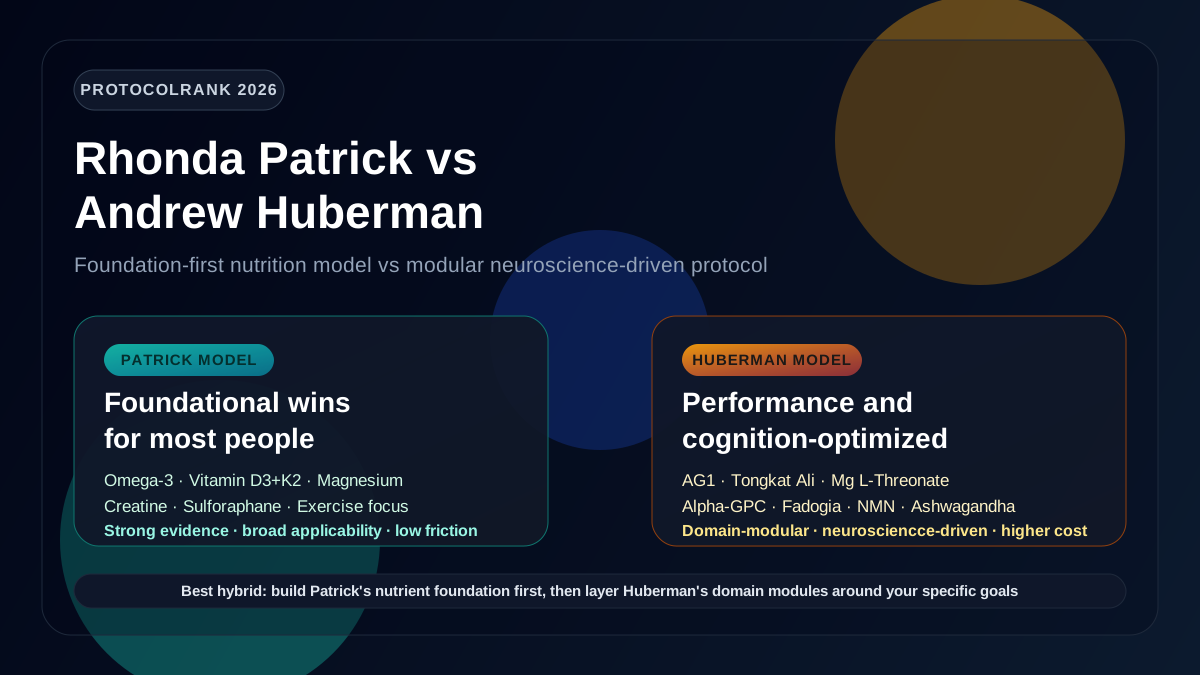
Visual Summary: Foundation-First vs Domain-Modular
Patrick's model wins on evidence breadth and default usefulness. Huberman's model wins when you have a specific performance domain you want to optimize. The best approach runs them sequentially.
Side-by-Side Comparison
| Category | Rhonda Patrick Approach | Andrew Huberman Approach |
|---|---|---|
| Primary Focus | Foundational nutritional sufficiency: eliminating deficiencies across omega-3 status, vitamin D, magnesium, and micronutrient density as the foundation of long-term health and disease prevention. | Domain-specific performance optimization: modular stacks targeting sleep quality, focus, testosterone, training recovery, and cognition — layered on top of basic nutritional adequacy. |
| Core Philosophy | Most people are deficient in key foundational nutrients; correcting those gaps with high-confidence, broadly-applicable compounds produces the largest health return per dollar. | Behavior and circadian biology come first; supplements are optional, domain-specific tools to enhance already-strong behavioral foundations — not substitutes for lifestyle quality. |
| Stack Style | 10–12 high-confidence foundational compounds including omega-3, vitamin D3+K2, magnesium, creatine, sulforaphane, and a small number of targeted additions for exercise recovery and inflammation control. | Modular domain stacks: a sleep stack (magnesium L-threonate or apigenin, L-theanine), focus stack (alpha-GPC, L-tyrosine), training stack (creatine, electrolytes), and hormone stack (tongkat ali, fadogia agrestis). |
| Signature Compounds | Omega-3 EPA/DHA (2–4 g/day), vitamin D3+K2, magnesium bisglycinate, creatine monohydrate (5 g/day), sulforaphane, zinc, vitamin C, and fermented foods as probiotic substrate. | AG1 (foundational micronutrients), omega-3, creatine, magnesium L-threonate, tongkat ali (600 mg), fadogia agrestis, NMN, alpha-GPC, ashwagandha, L-theanine, and LMNT electrolytes. |
| Evidence Standard | Prefers large-scale human RCT or strong epidemiological evidence. Prioritizes compounds with broad human utility across populations, not individual optimization bets. | Accepts mechanistic plausibility and observational data alongside RCT evidence. Will include compounds with limited direct human trial data if the mechanistic case is strong. |
| Estimated Monthly Cost | $60–120/month for the full foundational stack. Most individual compounds are commodity-priced; no premium delivery systems required. | $150–350/month depending on module selection. AG1 alone costs ~$99/month; tongkat ali, fadogia, alpha-GPC, and NMN add materially. |
| Monitoring Requirement | Annual bloodwork for vitamin D (25-OH), omega-3 index, magnesium RBC, and basic inflammatory markers. No physician requirement for most OTC compounds. | Minimal formal monitoring required for most OTC compounds; labs recommended for testosterone markers if using hormone stack; no required physician oversight. |
| Best Fit | Most adults who want a high-confidence, low-friction supplement foundation with strong evidence for long-term disease prevention and general health. | Performance-motivated individuals who want domain-specific optimization for sleep, cognition, training, or hormone health layered on top of a solid behavioral foundation. |
Overview: Two Evidence-Based Models, Two Different Goals
Rhonda Patrick and Andrew Huberman are two of the most widely followed figures in evidence-based health optimization — and their supplement approaches, while sharing a common root in genuine science literacy, differ substantially in philosophy, architecture, and who they're designed for.
Patrick is a PhD biochemist whose work centers on nutrient biochemistry, micronutrient deficiency, and the long-term disease-prevention implications of foundational nutritional status. Her supplement model reflects that: it's built on fixing gaps, not chasing performance. When she recommends omega-3s at high doses, it's because population-level data shows omega-3 deficiency is epidemic and the cardiovascular, inflammatory, and cognitive evidence is strong. Her recommendations tend to age well because they're built on broad-population human trial evidence.
Huberman is a Stanford neuroscientist and science communicator whose work focuses heavily on behavior, circadian biology, and how neural circuits govern performance. His supplement model reflects that: it's domain-organized, performance-facing, and explicitly additive to a behavioral foundation. The sleep stack, the focus stack, the hormone stack — these are all tools layered on top of behavioral fundamentals like light exposure, sleep timing, and structured training.
Neither model is wrong. Patrick's approach is optimized for maximum population-level health return per dollar. Huberman's approach is optimized for individual domain targeting. For most people, the highest-leverage move is to build Patrick's foundation first, then selectively add Huberman's domain modules where a specific performance outcome matters.
Stack Architecture: Foundational Sufficiency vs Domain Modules
Patrick's stack architecture is layer-one focused. She identifies compounds where the evidence for broad human benefit is strong across large populations: omega-3 EPA/DHA (where typical Western diets show chronic deficiency and where cardiovascular, inflammatory, and brain benefits are consistently demonstrated), vitamin D3+K2 (where deficiency is near-universal and where supplementation shows wide downstream benefits), magnesium (where soil depletion and dietary patterns produce chronic sub-optimal intake), creatine (where safety, bioavailability, and effect sizes on muscle and cognitive function are well-established), and sulforaphane (where the epidemiological and mechanistic evidence for NRF2 activation is strong despite limited large-scale RCT data).
Huberman's stack architecture is domain-modular. Rather than building a comprehensive health foundation, it organizes supplements by what circuit or outcome domain they're targeting. The sleep stack uses magnesium L-threonate (for CNS-specific magnesium delivery and potential sleep architecture support), apigenin (adenosine receptor interaction), and L-theanine (to reduce sleep-onset anxiety and improve sleep quality). The focus and cognition stack uses alpha-GPC (acetylcholine precursor for focus onset), L-tyrosine (catecholamine precursor for cognitive demand), and rhodiola rosea (adaptogen for cortisol buffering). The hormone optimization stack uses tongkat ali (a well-studied testosterone-supporting adaptogen with solid human trial data) and fadogia agrestis (a luteinizing hormone stimulant with limited but promising early research).
The practical implication: Patrick's architecture gives you a high floor. Huberman's architecture gives you targeted ceiling-raising in specific domains. The most coherent approach for most people is sequential: establish the Patrick foundation, then audit which performance domains matter most, and add the relevant Huberman modules for those specific targets.
Where the Two Stacks Overlap
Despite different architectures, the two models converge on several high-confidence compounds — which is itself strong evidence for their inclusion.
| Category | Patrick — Core Overlap | Huberman — Core Overlap |
|---|---|---|
| Omega-3 EPA/DHA | Core foundational: 2–4 g/day for inflammation, brain health, cardiovascular, and longevity. | Included as a baseline foundational compound alongside AG1. |
| Creatine Monohydrate | High-confidence for muscle, cognition, and aging. 5 g/day standard dose. | In the training stack; same dose recommendation (~5 g/day). |
| Magnesium | Magnesium bisglycinate for absorption and tolerability. Foundational. | Magnesium L-threonate for CNS/sleep-specific effects. Domain-targeted. |
| Behavior First | Supplements work because they sit on top of genuine lifestyle quality, not as a substitute for it. | Explicit principle: behavior and circadian biology are primary; supplements are the add-on. |
| Anti-Supplementation Minimalism | Only supplements where the human evidence base is strong; no chasing every new molecule. | Domain modules are selective and purposeful; not a maximalist stack. |
Evidence Standards: Population-Level vs Mechanistic Breadth
Patrick is explicit about her evidence threshold. She prioritizes compounds with strong human RCT data or robust epidemiological evidence in large populations. She is notably skeptical of trendy compounds where the evidence is limited to cell culture or animal models, and she regularly updates her recommendations as the literature evolves. This makes her stack conservative in the best sense — the recommendations are durable and unlikely to reverse.
Huberman's evidence standard is broader. He discusses mechanistic plausibility alongside RCT data, and he's more willing to include compounds like fadogia agrestis (limited human trial data but compelling LH-stimulating mechanism) or certain nootropic stacks where the mechanistic case is strong even if large human RCTs are absent. This makes his stack more exploratory but also potentially more subject to revision as the evidence base matures.
Where they overlap — omega-3, creatine, vitamin D — the evidence is simply strong enough that both researchers converge. Where they diverge, it's largely because Huberman's performance-facing goals lead him toward compounds that exist further along the evidence spectrum, while Patrick's population-health orientation keeps her anchored to compounds with the strongest broad-human evidence.
Cost, Budget, and Practical Decisions
Patrick's stack is materially cheaper. The core compounds — fish oil, vitamin D3+K2, magnesium bisglycinate, creatine monohydrate — are commodity-priced. A complete Patrick-aligned foundational stack typically runs $60–120/month depending on brand quality and omega-3 dose.
Huberman's stack is more expensive primarily because of AG1 ($99/month), which he has endorsed as a convenient foundational micronutrient delivery vehicle. Add tongkat ali, fadogia agrestis, alpha-GPC, NMN, ashwagandha, L-theanine, and LMNT electrolytes, and the full module stack can exceed $300/month if you're running multiple domains simultaneously.
For people on a budget: Patrick's foundational layer gives you 80% of the population-level health return at 30% of the cost. Huberman's modules are most valuable when you have a specific, prioritized performance outcome in mind and the foundational layer is already solid. Running the full Huberman stack without Patrick's foundational nutrients underneath it is backwards optimization.
Who Each Approach Actually Fits
Patrick's approach is the right default for most adults: broadly applicable, well-evidenced, cost-efficient, and designed around preventing the chronic diseases that are actually most likely to affect long-term health and lifespan. If you have a vitamin D deficiency, chronically low omega-3 index, or sub-optimal magnesium intake, fixing those with Patrick's framework will almost certainly produce a larger measurable health return than starting with hormone stacks or nootropics.
Huberman's approach is most valuable for performance-motivated individuals who already have a solid nutritional foundation and want to target specific domains: people who want sleep optimization (sleep stack), people in demanding cognitive environments (focus/cognition stack), men who want to support testosterone health naturally (hormone stack), or athletes who want to optimize training recovery (training stack with creatine, electrolytes, and protein timing).
The most common mistake is trying to run Huberman's domain stacks without Patrick's foundation underneath. The second most common mistake is running Patrick's foundation forever without ever auditing whether domain-specific optimization would meaningfully improve a prioritized outcome.
Not Sure Which Foundation Fits Your Goals?
Take the ProtocolRank quiz to get a personalized protocol recommendation based on your specific health goals, budget, experience level, and tolerance for complexity.
Take the Protocol Quiz →Our Verdict
For the default starting point, Rhonda Patrick's model wins on evidence quality, cost-efficiency, population-level applicability, and durability of recommendations. It's the foundation that most people should build first and maintain indefinitely.
For targeted performance optimization, Huberman's modular architecture is well-designed and thoughtfully organized. His sleep stack is among the most practically useful supplement protocols in popular health communication. His hormone stack, while including compounds with more limited evidence, reflects a reasonable bet for men who want to support natural testosterone output without pharmaceutical intervention.
The most productive framing is not Patrick vs Huberman but Patrick then Huberman: establish the foundational layer (omega-3, vitamin D3+K2, magnesium, creatine, sulforaphane), verify via bloodwork that the deficiencies are resolved, and then add the Huberman domain modules that match your specific performance priorities.
For Rhonda Patrick's standalone stack, see our Rhonda Patrick supplement stack ranked 2026. For Patrick's compare with David Sinclair, see our Rhonda Patrick vs David Sinclair comparison. For Huberman's compare with Peter Attia, see our Andrew Huberman vs Peter Attia supplement stack 2026. For the foundational omega-3 compounds both researchers endorse, see best omega-3 supplements ranked 2026 and creatine protocols ranked. For women-focused foundational supplement stacks in the Patrick tradition, see best anti-aging supplements for women ranked 2026.
Rhonda Patrick vs Andrew Huberman FAQ
What does Rhonda Patrick actually take every day?
Patrick's core daily supplements include high-dose omega-3 EPA/DHA (2–4 g/day), vitamin D3+K2, magnesium bisglycinate (around 300–400 mg elemental), creatine monohydrate (5 g), sulforaphane (from supplements or broccoli sprouts), zinc, and vitamin C. She also emphasizes fermented foods as probiotic substrate and closely tracks her 25-OH vitamin D and omega-3 index via bloodwork.
What supplements does Andrew Huberman take daily?
Huberman's current stack includes AG1 (as a comprehensive micronutrient base), omega-3 EPA/DHA (~2–3 g/day), creatine (5 g/day), magnesium L-threonate (~140 mg threonate form) or apigenin (50 mg) plus L-theanine (100–200 mg) for sleep, tongkat ali (600 mg), fadogia agrestis (600 mg), and alpha-GPC (300 mg) for focus. He also uses LMNT electrolytes and NMN. He notes his protocol changes over time as evidence evolves.
Which approach has stronger scientific evidence?
Patrick's core stack — omega-3, vitamin D, magnesium, creatine — has stronger broad-population human trial evidence. These are foundational compounds where the evidence for wide-scale benefit is robust. Huberman's domain-specific compounds like tongkat ali and alpha-GPC have decent human trial support; others like fadogia agrestis have more limited human data. Both researchers are serious about evidence quality, but Patrick's primary filter is population-level efficacy while Huberman accepts stronger mechanistic evidence alongside thinner human trial data.
Can I combine both stacks?
Yes, and many people do. The most coherent approach is to build Patrick's foundational layer first (omega-3, vitamin D3+K2, magnesium, creatine), verify your key biomarkers via bloodwork, and then layer in Huberman's domain modules that target your specific performance priorities. The only overlap to watch is magnesium: Patrick uses bisglycinate for broad repletion while Huberman uses L-threonate for CNS/sleep effects. You can take both at different times or choose based on your primary goal.
What is AG1 and does Rhonda Patrick use it?
AG1 (Athletic Greens) is a comprehensive greens-and-micronutrient powder that Huberman has endorsed as a convenient foundational supplement. Patrick does not use or publicly endorse AG1 — her foundational approach relies on individual high-quality compounds rather than an all-in-one product, which she generally views as less dose-controlled and harder to calibrate per compound than targeted supplementation.
What are the biggest differences between Rhonda Patrick and Andrew Huberman?
The biggest differences are: (1) Philosophy — Patrick builds on population-level deficiency correction; Huberman builds on domain-specific performance circuits. (2) Stack architecture — Patrick is horizontal (foundational sufficiency); Huberman is vertical (domain modules). (3) Evidence standard — Patrick emphasizes large-scale human RCTs; Huberman accepts broader mechanistic evidence. (4) Cost — Patrick's stack is $60–120/month; Huberman's full stack can exceed $300/month. (5) Sulforaphane — unique to Patrick; not part of Huberman's standard protocol.
Should I start with Patrick's stack or Huberman's?
Start with Patrick's foundational layer. Fix omega-3 status, vitamin D, magnesium, and add creatine. Get bloodwork to confirm your baseline biomarkers are optimized. Then, once the foundation is solid, add the Huberman domain modules that matter most for your specific goals — sleep, focus, hormone health, or training. Building performance modules on an unfixed nutritional foundation is backwards optimization.
Does Rhonda Patrick recommend sulforaphane?
Yes — sulforaphane is one of Patrick's most-discussed compounds. She favors it for NRF2 pathway activation, which supports antioxidant defense, glutathione production, and potential cancer-protective mechanisms. She typically recommends fresh broccoli sprouts as the highest-bioavailability source, though supplement forms exist. This compound is absent from Huberman's standard protocol — it represents one of the clearest differentiators between the two stacks.