Supplement Comparison
David Sinclair vs Bryan Johnson: Longevity Protocol Comparison 2026
A Harvard longevity scientist whose lab pioneered NAD+ and sirtuin research versus a tech billionaire engineering his own biology like software. Two of the most extreme longevity protocols compared across supplement stacks, evidence standards, cost, complexity, and who each approach realistically fits.
TL;DR — Quick Verdict
- Sinclair: Pathway-targeted longevity science — NMN, resveratrol, metformin, senolytics. Coherent molecular model. Replicable at $150–$350/month.
- Johnson: Systems-engineering biology — 100+ compound Blueprint with continuous biomarker feedback. Most value from monitoring discipline, not compound count.
- Both agree: Sleep, Zone 2 exercise, resistance training, intermittent fasting, and protein adequacy deliver more longevity ROI than any supplement stack.
- Best synthesis: Sinclair's targeted compound logic + Johnson's data-verification discipline = the highest-return personal longevity architecture for most people.
Further Reading from Our Sister Sites
Alive Longevity
Alive Longevity: Longevity Supplement Guides
Research-backed supplement explainers and buyer guides for stacking decisions.
Alive Longevity
Alive Longevity: Ingredient Deep Dives
Deep dives on high-interest ingredients like omega-3s, collagen, and magnesium forms.
Alive Longevity
Alive Longevity: NAD+ and Mitochondria Articles
Topic-focused reading for NAD boosters, mitochondrial support, and healthy-aging strategy.
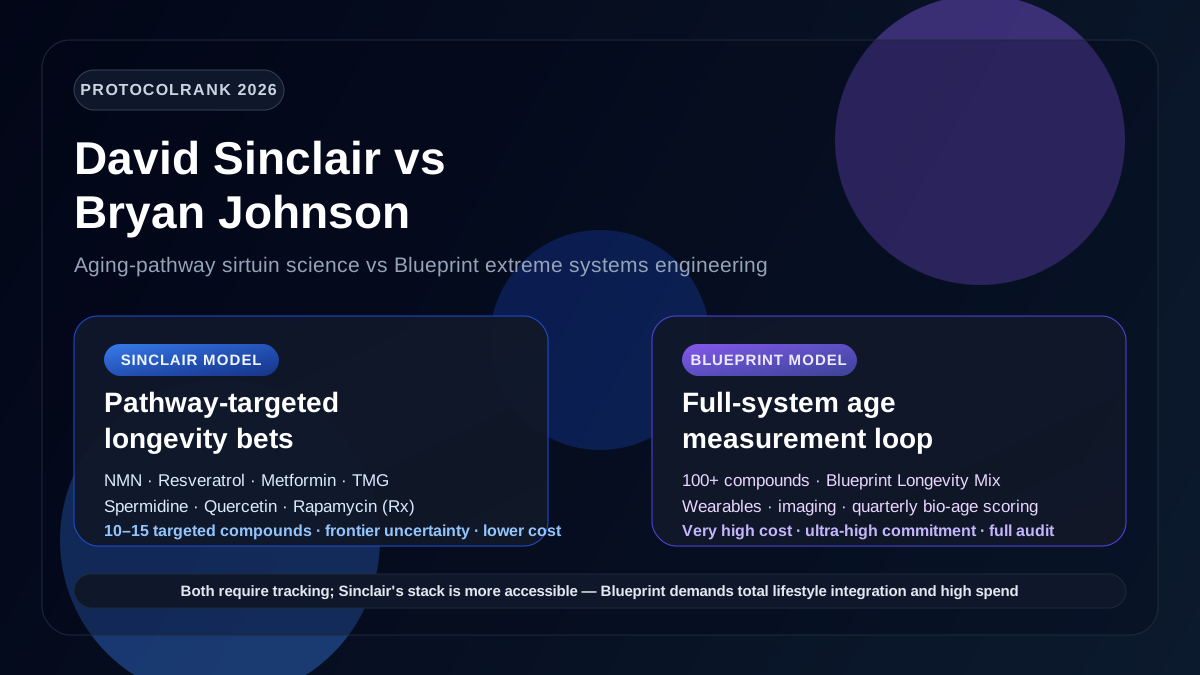
Visual Summary: Pathway Bets vs Systems Engineering
Sinclair targets specific aging pathways with a focused stack. Johnson engineers the entire body as a system with 100+ compounds. Both are high-conviction longevity bets at different scales of commitment.
Side-by-Side Comparison
| Category | David Sinclair Approach | Bryan Johnson Approach |
|---|---|---|
| Primary Focus | Targeting the molecular hallmarks of aging — NAD+ decline, sirtuin dysfunction, mTOR dysregulation, and senescent cell accumulation — via targeted compounds and behavioral design. | Systems-engineering the body's biological age by optimizing every measurable biomarker simultaneously through a comprehensive diet, supplement, and monitoring protocol. |
| Core Philosophy | Aging is a disease with addressable root causes; NMN, resveratrol, and senolytic compounds can slow the epigenetic clock by restoring youthful gene expression patterns. | The body is software that can be continuously updated via data-driven CI/CD loops; every protocol decision should be anchored to measurable outcome signals, not theory alone. |
| Stack Style | Focused stack of 10–15 targeted compounds (NMN, resveratrol, metformin, TMG, senolytics, vitamin D/K2, statin) plus intermittent fasting and plant-forward diet. | Comprehensive 100+ compound Blueprint protocol with a precisely formulated dietary program, wearable monitoring, and scored biological age assessments every 90 days. |
| Complexity | Moderate. Most compounds are over-the-counter; requires a prescriber for metformin and statin. Protocol is manageable for a motivated person without dedicated infrastructure. | Extreme. Demands daily discipline, precise food weighing, a large supplement routine, continuous biomarker monitoring, and multiple annual clinical assessments to operate correctly. |
| Estimated Monthly Cost | Approximately $150–$350/month in OTC supplements; prescriptions, bloodwork, and biological age testing add cost but are periodic rather than continuous. | Approximately $100–$200/month for the published Blueprint protocol; the full original stack with all monitoring and clinical inputs was significantly higher. |
| Monitoring Requirement | Regular bloodwork (quarterly preferred), annual biological age testing (epigenetic clock), and self-reported outcome tracking. High-frequency biometric tracking is optional. | Continuous tracking is foundational: daily CGM data, HRV, sleep scores, and periodic DEXA, MRI, and full blood panel sweeps that each generate hundreds of data points. |
| Evidence Approach | Grounded in Sinclair's own NAD+/sirtuin research and peer-reviewed longevity science; accepts mechanistic evidence plus positive animal and early human data at the frontier. | Primary evidence source is Johnson's own n=1 outcome data: compound retained if biomarkers improve or hold; removed if signals deteriorate. Theory is secondary to personal outcome. |
| Best Fit | Science-minded adults who want the leading academic longevity protocol in its most replicable form — without requiring biohacker-level infrastructure or extreme lifestyle sacrifice. | Highly disciplined quantified-self practitioners willing to commit fully to protocol compliance as a primary life project, with tolerance for significant overhead and monitoring costs. |
Overview: The Scientist vs The Engineer
The contrast between David Sinclair and Bryan Johnson is one of the most instructive in longevity science — not because one is clearly correct, but because they represent genuinely different epistemic traditions applied to the same goal. Sinclair is a Harvard Medical School professor whose laboratory produced foundational work on NAD+, sirtuins, and epigenetic reprogramming. Johnson is a tech entrepreneur who sold Braintree to PayPal and spent a reported $2 million per year attempting to reverse his biological age using principles from software systems design. Their protocols look different, their evidence standards are different, and the kind of person each approach is built for is different.
Sinclair's longevity framework starts from a theoretical claim: aging is not inevitable wear and tear but a loss of epigenetic information that can, in principle, be restored. The NAD+ precursor NMN, resveratrol as a sirtuin activator, metformin as an AMPK activator, and senolytic compounds like quercetin and fisetin are all selected because they target specific molecular mechanisms in this framework. The protocol is coherent as a research-informed theory, and Sinclair takes the same compounds he studies — giving his public disclosures unusual credibility, even though human longevity trial data remains limited.
Johnson's Blueprint protocol starts from a different premise: the body is a complex system, and the right methodology is continuous measurement and feedback, not theory. Every compound in the Blueprint stack is evaluated against real-time biomarker data. If a marker improves or holds, the compound stays. If a marker deteriorates, the compound is adjusted or removed. The evidence is personal and immediate rather than academic and probabilistic. This makes the Johnson approach feel more rigorous to data-oriented people and more arbitrary to evidence-hierarchy-oriented people, depending on your prior.
The comparison is made more interesting by what both figures share. Both practice intermittent fasting. Both prioritize sleep with unusual discipline. Both include NMN and NAD+ pathway support. Both emphasize resistance training and cardiovascular fitness. Both track bloodwork extensively. Both have moved away from certain compounds they previously endorsed as their understanding evolved — Sinclair dropped alpha-lipoic acid and baby aspirin; Johnson removed plasma transfusions and has periodically adjusted his stack based on outcome data. The willingness to revise is itself a signal of intellectual honesty in both cases.
The practical question for most readers is not which figure to emulate wholesale, but which frameworks and principles to extract. Sinclair's approach offers a coherent molecular model that most people can implement at moderate cost and reasonable complexity. Johnson's approach offers a data discipline and outcome-verification methodology that is valuable even if the full protocol is unachievable for 99.9% of people. Understanding both improves any personal protocol.
This comparison is structured around six dimensions: protocol philosophy, stack architecture, evidence standards, cost and complexity, who each approach fits, and a ProtocolRank synthesis verdict. The goal is to help readers extract maximum value from two extreme longevity experiments without requiring either the Harvard lab or the Venmo fortune.
Stack Architecture: Targeted Pathways vs Comprehensive Blueprint
Sinclair's core supplement protocol centers on three flagship compounds: NMN (1g/day), resveratrol (1g/day), and metformin (800mg/day, prescription). NMN is an NAD+ precursor intended to restore NAD+ levels that naturally decline with age. Resveratrol is taken simultaneously with a fat source — typically a spoonful of yogurt — to activate sirtuins. Metformin, historically a type 2 diabetes drug, is used at a lower longevity dose as an AMPK activator, though Sinclair has noted he avoids taking it immediately before or after exercise to preserve adaptation signals.
Rounding out Sinclair's stack are: TMG (trimethylglycine) taken alongside NMN to prevent potential methyl donor depletion; vitamin D3 at 5,000 IU with K2; a statin (atorvastatin) for cardiovascular risk management; quercetin and periodic fisetin pulses as senolytics to clear accumulated senescent cells; and spermidine, a polyamine linked to autophagy activation. Baby aspirin was part of the protocol but was removed in 2022–2023 after primary prevention trial data shifted the risk-benefit calculus. Alpha-lipoic acid was similarly dropped.
This is a protocol with a clear mechanistic logic. Each compound maps to a defined aging pathway: NAD+ restoration, sirtuin activation, AMPK/mTOR modulation, senolytic clearance, methylation support, cardiovascular risk reduction. The stack can be understood as a set of levers, each targeting a specific molecular aging process, rather than a catch-all collection of trendy supplements.
Bryan Johnson's Blueprint protocol operates at a different scale. The published stack includes over one hundred compounds, ranging from well-established foundational supplements (creatine, omega-3, magnesium) to more targeted agents (lycopene, lithium at microdose, NAC, fisetin, NMN, pterostilbene). The dietary component is equally precise: Blueprint meals are specific formulas — measured in grams — that optimize for nutrient density, polyphenol content, and caloric precision. The original $2M/year version included plasma transfusions and experimental interventions that have since been removed.
The structural difference in how the two stacks are built matters as much as the contents. Sinclair's stack is built deductively: start with an aging theory, identify molecular targets, choose compounds that hit those targets. Johnson's stack is built inductively: run everything that could plausibly help, measure outcomes obsessively, keep what works, remove what doesn't. The deductive approach is more replicable and teachable. The inductive approach requires extraordinary personal infrastructure but produces a protocol that is optimized for one specific individual in a way no population-derived recommendation can be.
For most people, neither pure approach is fully practicable. Sinclair's stack is much more accessible — the prescription elements aside, the core compounds cost roughly $150–$300 per month and require no specialized equipment. A reasonable practical synthesis is to take Sinclair's targeted compound logic as the core architecture, adopt the Blueprint's data-verification discipline by running bloodwork before and after protocol changes, and resist the urge to accumulate compounds without individual outcome attribution.
Where the Two Protocols Overlap
Despite their different methodological starting points, Sinclair and Johnson converge on a meaningful core — and these shared elements represent the highest-confidence signals in the longevity supplement space.
| Category | Sinclair — Core Elements | Johnson — Core Elements |
|---|---|---|
| NMN / NAD+ Pathway | NMN at 1g/day is a flagship compound; Sinclair's own research underpins the NAD+ decline-with-age thesis and sirtuin reactivation rationale. | NMN included in Blueprint; NAD+ pathway support is part of the cellular health stack alongside other mitochondrial compounds. |
| Resveratrol / Polyphenols | Resveratrol at 1g/day is a core compound, taken with fat (yogurt) for absorption; presented as a sirtuin activator that works synergistically with NMN. | Pterostilbene (resveratrol analog with higher bioavailability) included in Blueprint; polyphenol coverage is part of the anti-inflammatory cellular protection layer. |
| Vitamin D3 + K2 | 5,000 IU vitamin D3 daily with K2 pairing; foundational immune, bone, and cardiometabolic support. Dose is on the higher end and guided by bloodwork. | Vitamin D3 and K2 are Blueprint staples; dosing is calibrated against bloodwork results and monitored at each quarterly assessment. |
| Intermittent Fasting / Calorie Restriction | One to two meals per day, typically skipping breakfast, with eating windows that activate AMPK and sirtuin pathways associated with longevity gene expression. | Blueprint uses precise calorie restriction to defined targets; fasting windows are engineered into the dietary protocol with exact macros measured daily. |
| Exercise: Zone 2 + Resistance | Consistent cardiovascular (Zone 2) and resistance training; exercise timing relative to metformin is a noted consideration, as metformin may blunt some exercise adaptation signals. | Daily structured exercise is non-negotiable in Blueprint; a defined multi-component routine covering cardiovascular fitness, strength, and flexibility is tracked and scored. |
| Sleep Optimization | Seven to eight hours, consistent sleep timing, and avoidance of disruptors (alcohol, late meals) are foundational to sirtuin and metabolic function, not optional. | Sleep is one of the highest-weighted Blueprint variables: 8:30 PM bedtime strictly maintained, with HRV and sleep score as primary daily readiness signals. |
Evidence Standards: Research-Derived vs Outcome-Driven
Sinclair's evidence framework is shaped by his academic role. He is unusually transparent about what he knows, what he suspects, and what remains uncertain. The NAD+ decline with aging is well-documented in animal models and supported by human observational data. The sirtuin activation story is mechanistically interesting and supported by animal data, but large-scale controlled human trials on longevity endpoints are not yet available — and Sinclair acknowledges this. He is comfortable acting on mechanistic evidence at the longevity frontier in a way that a purely clinical-trial-first thinker like Attia would not be.
Resveratrol is a useful illustration of the evidence tension. Sinclair's own research supports the SIRT1 activation mechanism. However, independent clinical trials on resveratrol bioavailability and health outcomes in humans have produced mixed results, and some researchers have questioned the translatability from yeast and mouse models to humans. Sinclair maintains the compound as part of his personal protocol while the science continues to develop. This is not intellectual inconsistency — it is a defensible decision under uncertainty when the risk profile of the compound is low — but it does mean the protocol requires accepting some unresolved mechanistic debates.
Metformin's longevity case is the most clinically mature element of Sinclair's protocol. The TAME trial (Targeting Aging with Metformin) is actively studying longevity outcomes in non-diabetic older adults. Observational data from diabetic populations treated with metformin show lower incidence of cancer, cardiovascular events, and all-cause mortality compared to other treatment modalities. The risk-benefit for metformin in longevity use at low doses, under physician supervision, is one of the more defensible cases for a prescription longevity compound. The exercise blunting concern is real and worth managing through timing.
Johnson's evidence model is harder to evaluate externally because it is n=1 by design. His outcome data shows real results: his reported biological age on various clocks is younger than his chronological age, his epigenetic measurements have improved, and his metabolic markers are outstanding for a man in his late forties. However, the n=1 structure makes it impossible to attribute specific outcomes to specific compounds. The entire protocol runs simultaneously, so signal-source attribution is lost. A single compound might be doing all the work, or no individual compound might matter at all beyond the dietary and behavioral foundations.
The most honest assessment is: both figures are running experiments at the edge of current evidence, with different methodological preferences. Sinclair's approach is more falsifiable at the mechanistic level — his theory makes predictions that can be tested and updated as NAD+ and sirtuin science matures. Johnson's approach is more falsifiable at the outcome level for himself specifically, but less generalizable. The overlap zone — where both agree, and where the evidence is relatively consistent — is the highest-confidence region for anyone designing a personal protocol.
For a reader trying to calibrate, the most actionable lens is to treat the Sinclair-stack compounds with the most human evidence (metformin, vitamin D, NMN, TMG) as the high-confidence tier, compounds with strong mechanistic rationale but thinner human data (resveratrol, fisetin/quercetin senolytics, spermidine) as moderate-confidence experiments worth running with an honest evaluation period, and Blueprint-specific precision elements (exact macros, 100+ compounds, continuous CGM) as high-return for obsessive practitioners but delivering diminishing returns for most people after foundational behaviors are in place.
Cost, Complexity, and Adherence
Sinclair's core OTC protocol — NMN, resveratrol, TMG, vitamin D3+K2, quercetin, spermidine — runs approximately $150–$250 per month depending on brand and sourcing quality. NMN and resveratrol at the doses Sinclair uses are not cheap; NMN at 1g/day from a quality vendor can exceed $80–$100/month alone. Adding metformin and a statin requires a prescriber but these are inexpensive generics once prescribed. Annual epigenetic age testing (TruAge, EpiAge) adds $200–$400 per test. Total annual protocol cost for a full Sinclair-inspired implementation is realistically $2,500–$5,000 including testing.
Bryan Johnson's Blueprint has undergone a deliberate scale-down. The published Blueprint protocol targets approximately $100–$200/month for the supplement stack, specifically designed to be more accessible than the original $2M/year full version. However, implementing Blueprint properly also requires consistent dietary precision, some form of ongoing biomarker tracking, and periodic clinical assessments — costs that scale with engagement depth. The Blueprint approach can be run cheaply at the dietary-and-foundational-supplement level, but the value of the system comes from the monitoring layer, which adds cost.
Adherence structure differs significantly between the two. Sinclair's protocol is relatively straightforward to execute once the compounds are in hand: NMN and resveratrol with a fat source in the morning, other compounds at relevant times, metformin at night. There is no daily weighing, no continuous monitoring device required, no 8:30 PM bedtime mandate. Most people with moderate health motivation can implement the Sinclair core stack with high compliance over months to years.
Blueprint adherence is structured around the monitoring system itself. The discipline of weighing food, logging data, reviewing scores, and adjusting based on trends is motivating for systems-minded practitioners and exhausting for everyone else. The compliance burden is not primarily the supplements — it is the infrastructure. People who find daily quantification energizing will get full value from Blueprint-style protocols. People who find it stressful or time-consuming will typically experience compliance decay, which removes the value of the entire system.
There is also a cognitive load dimension that is easy to underestimate. Managing a 100+ compound supplement protocol — refills, timing, travel formulations, interaction monitoring — occupies meaningful mental bandwidth. Several reviews of the full Johnson protocol by practitioners note that the overhead of the protocol itself becomes a stressor, which creates a potential cortisol signal that partially offsets the benefit of the interventions. This is not a trivial consideration for anyone trying to replicate the approach.
For most serious longevity practitioners, the practical sweet spot is approximately $200–$400/month in total supplement spend, a simplified 8–12 compound protocol anchored in high-confidence compounds, quarterly bloodwork, and at least one annual biological age test to verify directional progress. This captures the majority of accessible value from both models without requiring either extreme infrastructure or extreme budget.
Who Each Approach Is Best For
Sinclair's protocol is well-suited to science-minded adults who want a theoretically coherent longevity protocol rooted in academic research, without requiring extraordinary lifestyle sacrifice. The approach works for people who are comfortable with some uncertainty at the research frontier, who have a prescriber willing to discuss metformin and statin use in a longevity context, and who can invest $150–$350/month in supplements. The behavioral foundations — intermittent fasting, plant-forward diet, consistent exercise, optimized sleep — are the highest-return elements and require no spending at all.
Bryan Johnson's Blueprint is best suited to people who have already implemented strong behavioral foundations and want to apply a data-first optimization layer on top. It is particularly valuable for practitioners who are genuinely energized by quantified-self work, who have the time and budget to run the monitoring infrastructure properly, and who can maintain very high protocol compliance. Blueprint is not an entry point — it is an advanced-tier commitment that delivers its value primarily through the discipline and monitoring system, not through any single compound.
A practical hybrid approach works well for most serious practitioners: use Sinclair's targeted compound logic to select a focused protocol anchored to defined molecular pathways, adopt Johnson's data-verification discipline by establishing bloodwork baselines before changes and reviewing outcomes at 90-day intervals, and use the Blueprint dietary framework as a quality calibration signal for nutrition density without requiring full precision compliance.
Both approaches are ill-suited for supplement beginners. The Sinclair stack assumes a behavioral foundation (sleep, exercise, nutrition) is already in place; layering NAD+ precursors and senolytics on top of poor sleep and a sedentary lifestyle will not produce meaningful longevity benefit. The Blueprint protocol explicitly requires behavioral foundations as the base — the dietary component alone requires dietary discipline that surpasses what most people currently practice.
Age is also relevant to protocol selection. Senolytics (quercetin, fisetin) are most relevant when a meaningful senescent cell burden has accumulated, which increases with age. Younger users in their twenties and thirties may benefit more from NAD+ support, vitamin D optimization, and creatine than from aggressive senolytic cycling. Older users and those with identified metabolic risk factors have stronger cases for metformin and statin integration. Protocol design should be age-calibrated, not treated as a universal recommendation.
For women specifically, the hormonal context of both protocols deserves attention. Neither Sinclair nor Johnson has made his protocol primarily from female-specific data. The core foundational elements (vitamin D, omega-3, creatine, magnesium, sleep, resistance training, Zone 2 exercise) apply across sexes. The NMN/resveratrol/metformin cluster has less female-specific trial data, and some of the monitoring targets Sinclair discusses are more relevant to male-pattern cardiovascular risk. Female users should treat individual compounds as experiments to track against personally relevant markers rather than default to male-calibrated doses and targets.
Not Sure Which Longevity Approach Fits You?
Take the ProtocolRank quiz to get a personalized protocol recommendation based on your goals, age, budget, and monitoring tolerance — in under two minutes.
Take the Protocol Quiz →Our Verdict
ProtocolRank verdict: David Sinclair and Bryan Johnson represent two of the most ambitious and public longevity experiments running today. The correct response to both is not wholesale adoption but selective extraction. Sinclair provides the best available academic longevity framework, grounded in NAD+/sirtuin science, that most motivated people can implement at reasonable cost. Johnson provides the best available methodology for continuous outcome verification, even if the full protocol is unreplicable for almost everyone.
The highest-return extract from Sinclair's approach is the targeted compound logic: identify a molecular aging pathway, select a compound with a defensible mechanistic rationale, run it at an appropriate dose, and evaluate outcomes at intervals against relevant markers. The highest-return extract from Johnson's approach is the data discipline: establish pre-protocol baselines, run changes one variable at a time where possible, and require evidence of movement in the right direction before retaining a compound in a permanent stack.
Combining these two principles — Sinclair's pathway-targeted compound selection and Johnson's outcome-verification discipline — produces a protocol architecture that outperforms copying either figure's ingredient list. Most people will benefit from: a foundational behavioral protocol (sleep, Zone 2, resistance, protein, intermittent fasting), a focused 5–8 compound supplement stack with clear mechanistic rationale (creatine, vitamin D+K2, omega-3, magnesium, NMN if budget allows), regular bloodwork reviewed against defined targets, and an annual biological age assessment to verify directional progress.
Neither figure has cracked the longevity code. Sinclair's NAD+/sirtuin thesis is scientifically credible but awaiting clinical confirmation in humans on longevity endpoints. Johnson's results are impressive for one individual but not generalizable without the full monitoring and compliance infrastructure. Both are making valuable contributions to public knowledge about what is possible at the frontier of longevity science. The practical gift to the rest of us is a clearer view of the design space.
For the complete influencer protocol cluster, see our Bryan Johnson Blueprint vs Peter Attia protocol comparison, our Huberman vs Blueprint supplements analysis, and our Huberman vs Attia supplement stack comparison. For individual compounds in Sinclair's stack, see our best spermidine supplements ranked and best resveratrol supplements. For the NMN vs NR decision, see our NMN vs NR vs NAD+ comparison. For another evidence-first longevity researcher's supplement stack, see our Rhonda Patrick supplement stack ranked 2026. To compare Sinclair directly against Patrick's more foundational model, read our Rhonda Patrick vs David Sinclair supplement stack comparison.
David Sinclair vs Bryan Johnson FAQ
What supplements do David Sinclair and Bryan Johnson both take?
Both include NMN (NAD+ precursor), vitamin D3 with K2, fisetin as a senolytic, and prioritize protein, omega-3, and creatine as foundational compounds. Both also practice intermittent fasting and consistent structured exercise. Beyond this overlap, their stacks diverge significantly in scope and rationale.
Does David Sinclair still take NMN and resveratrol in 2026?
Based on Sinclair's most recent public disclosures, NMN (1g/day) and resveratrol (1g/day with a fat source) remain core to his protocol. These compounds remain central to his NAD+/sirtuin longevity research. His overall protocol has evolved — he dropped baby aspirin and alpha-lipoic acid in prior years — but the NAD+/sirtuin compound cluster has remained stable.
How much does David Sinclair's supplement protocol cost per month?
The OTC core of Sinclair's protocol — NMN, resveratrol, TMG, vitamin D3+K2, quercetin, spermidine — costs approximately $150–$250/month depending on sourcing. Prescription metformin and atorvastatin are inexpensive generics. Annual epigenetic age testing adds $200–$400 periodically. Total annual spend including testing is roughly $2,500–$5,000 for a fully implemented version.
What happened to Bryan Johnson's $2 million longevity protocol?
Johnson has progressively systematized and scaled down the Blueprint protocol from its original $2M/year research phase to a published stack targeting $100–$200/month in supplements. Several experimental interventions (plasma transfusions from his son, certain experimental compounds) were removed as the protocol was refined. The current Blueprint is designed to be more accessible without abandoning the monitoring and precision foundations.
Is David Sinclair's longevity protocol evidence-based?
Sinclair's protocol is grounded in peer-reviewed research on NAD+, sirtuins, mTOR, and cellular senescence, much of it from his own laboratory. However, the direct human longevity trial evidence for compounds like resveratrol and NMN specifically remains limited — the mechanisms are well-supported but clinical proof of longevity benefit in humans is still developing. Metformin has the strongest clinical evidence base of his core compounds.
Who is David Sinclair's approach best suited for?
Sinclair's protocol is best suited to science-minded adults who want a theoretically coherent longevity framework they can implement at moderate cost without needing biohacker-level infrastructure. It works well for people already maintaining behavioral foundations (sleep, exercise, diet) who want to add targeted molecular-pathway support with a defensible scientific rationale.
Can a regular person follow Bryan Johnson's Blueprint protocol?
The published Blueprint protocol — available at bryanjohnson.com — is designed to be implementable at approximately $100–$200/month in supplements, paired with the Blueprint dietary approach. The foundational version is accessible. However, the full value of the Blueprint system requires consistent monitoring discipline (bloodwork, sleep scores, daily data collection) that demands significant time and commitment beyond the supplement stack itself.